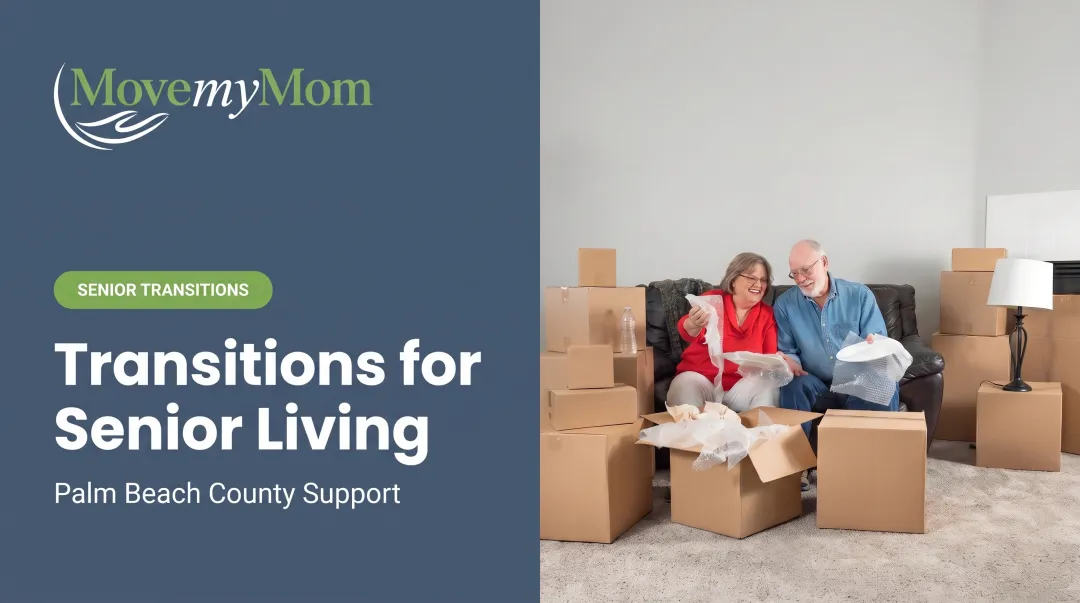

Introduction: What You Need to Know About Moving to Senior Living
Every year, thousands of families across Palm Beach County face a decision that's both deeply personal and practically complex: whether and when to move an aging parent into a senior living community. According to the CDC, 53% of residential care community residents are age 85 or older. Many families later wish they had started planning earlier.
This transition brings two distinct challenges. First, the logistics: downsizing decades of belongings, coordinating movers, preparing a home for sale, and managing move-in paperwork. Second, the emotions: grief over leaving a longtime home, anxiety about change, and guilt for adult children who wonder if they're doing the right thing.
This guide covers the full journey. You'll learn how to recognize when it's time, choose the right community, prepare emotionally, manage the move, and settle into the next chapter with confidence.
Key Takeaways:
- Planning before a crisis leads to better outcomes than reactive moves
- Touring multiple communities and speaking with residents reveals the real culture
- Rightsizing focuses on what fits your next chapter, not just what to discard
- Professional support reduces stress on families and preserves time for emotional connection
- Most residents need 3-6 months to feel truly at home in their new community
Is Moving to a Senior Living Community Right for You?
Signs It May Be Time to Consider the Move
Certain changes signal that it may be time to explore senior living options. According to the Alzheimer's Association, key indicators include:
- Safety concerns at home - Falls, medication management issues, or difficulty navigating stairs
- Increasing isolation - Limited social contact, loss of a spouse, or inability to drive
- Home maintenance burden - Yard work, repairs, and housekeeping becoming unmanageable
- Caregiver strain - Family caregivers showing signs of irritability, exhaustion, or neglecting their own responsibilities
- Health changes - New diagnoses or care needs that exceed what family can provide at home
- Desire for engagement - Longing for more activities, companionship, or structured routines

Research shows that rushed, crisis-driven transitions can be detrimental to mental health, while voluntary moves planned in advance give residents more control, time to personalize their new space, and better adjustment outcomes. Advance planning preserves dignity and gives you real choice during a major life change.
Weighing Your Options: Aging in Place vs. Senior Living
The choice between aging in place and moving to a senior community involves trade-offs in five key areas:
Independence & Control:
- Aging in place preserves familiar routines and total autonomy
- Senior living offers freedom from home maintenance but introduces community rules
Social Connectivity:
- Aging in place can lead to isolation if mobility or transportation is limited
- Senior living provides built-in social opportunities, activities, and dining with neighbors
Safety & Care Access:
- Aging in place requires coordinating multiple in-home services as needs change
- Senior communities offer on-site staff, emergency response, and a continuum of care levels
Cost Considerations:
- Aging in place requires home upkeep, in-home care, meal delivery, and transportation, with costs that escalate over time
- Senior living has predictable monthly fees; Florida's 2024 median for assisted living is $5,324 per month
Impact on Family Caregivers:
- Aging in place often shifts increasing responsibility to adult children who coordinate services, manage crises, and provide companionship
- Senior living reduces the coordination burden, allowing family to focus on quality time rather than logistics
Understanding Different Types of Senior Living
Independent Living provides apartment-style housing, often with meals, housekeeping, transportation, and social activities. Residents are generally healthy and active; most need little or no hands-on care.
Assisted Living adds personal care support (help with bathing, dressing, and medication management) while preserving as much independence as possible. The Alzheimer's Association defines it as bridging independent living and 24-hour nursing care.
Memory Care offers specialized environments and staff trained to support residents with Alzheimer's or other dementias, often within a secure unit or building.
Continuing Care Retirement Communities (CCRCs) provide independent living, assisted living, and nursing care on one campus. Residents can move between levels as needs change without relocating to a new community. That continuity is a major advantage if you want to avoid future moves.

Most people begin with independent living while they're still active and healthy, then transition to higher care levels only if and when needed.
Questions to Ask Yourself and Your Family
Before touring communities, reflect honestly on these questions:
- Current lifestyle satisfaction: Are you content at home, or do you feel isolated, burdened, or unsafe?
- Health trajectory: What care might you need in 3-5 years, and can your current home support that?
- Social needs: How important is regular social interaction, organized activities, and nearby companionship?
- Financial readiness: What can you afford monthly, and do you have funds available for an entrance fee if required?
- Proximity to family: How often do you want to see adult children or grandchildren, and can they visit easily?
Have these conversations with adult children before a crisis forces rushed decisions. Early dialogue allows everyone to research options, tour communities together, and make a choice that honors your preferences rather than reacting to an emergency.
Choosing the Right Senior Living Community
Starting Your Research
Begin by identifying what's most important to you: location near family, specific amenities (pool, fitness center, on-site therapy), available care levels, community culture (active vs. quiet), and budget. Write these priorities down before you start visiting. A beautiful lobby can sway you into forgetting what truly matters.
In Palm Beach County, options range from large CCRCs to smaller assisted living residences in Boca Raton, Delray Beach, and surrounding areas. Ask friends, physicians, or local senior services for recommendations.
Online reviews offer clues, but look for patterns (repeated mentions of poor food quality or consistently praised staff) rather than isolated complaints. The FTC prohibits fake reviews, but not every testimonial tells the full story.
Cross-check reviews against Florida's official assisted living inspection reports, which list complaints, deficiencies, sanctions, and occupancy rates.
Touring Communities: What to Look For
Schedule tours at 3-5 communities and visit each more than once—ideally at different times of day. During your visits, observe:
- Resident engagement - Are people socializing, participating in activities, or sitting alone?
- Staff interactions - Do staff greet residents by name, respond promptly to requests, and seem genuinely caring?
- Cleanliness - Check common areas, dining rooms, and hallways for odors, clutter, or signs of deferred maintenance
- Food quality - Attend a meal if possible; taste the food and watch whether residents enjoy it
- Activity calendars - Are events varied, frequent, and scheduled evenings and weekends?
- Overall atmosphere - Does the community feel lively and welcoming, or institutional?
Talk directly with current residents. Ask how long they've lived there, what they enjoy, and what they'd change. Their candor will tell you more than any brochure.

Bring a trusted family member or friend for a second perspective. They may notice details you miss or ask questions you didn't think to raise.
Essential Questions to Ask Community Staff
Come prepared with a written list. Critical questions include:
Costs & Fees:
- What is the total monthly cost, and what exactly does it include (meals, housekeeping, utilities, activities)?
- Are there entrance fees, community fees, or deposits?
- How often do rates increase, and by how much historically?
- What services or care levels cost extra?
Care & Staffing:
- What is your staff-to-resident ratio during day, evening, and night shifts?
- If I need more care in the future, can I stay here or must I move?
- How do you handle medical emergencies?
Contracts & Policies:
- What is the contract term, and what are the refund or cancellation policies?
- What happens if I need to move out or run out of funds?
- Do you accept Medicaid if my savings are depleted?
Take notes during each visit and request written answers for complex financial or contract questions.
Understanding the Financial Commitment
Senior living costs vary widely based on location, care level, and amenities. Genworth's 2024 survey reports Florida's statewide median for assisted living at $63,885 annually ($5,324/month), but Palm Beach County communities may charge more or less depending on the property.
Cost structures:
- Entrance fee + monthly fee: Common in CCRCs; entrance fees range from tens of thousands to hundreds of thousands of dollars, with varying refund policies
- Monthly fee only: More common in independent and assisted living; all costs are monthly with no upfront payment
Always confirm which meals, utilities, housekeeping, transportation, activities, and care services are covered, and which cost extra.
Compare these costs to your current home expenses (mortgage or rent, utilities, maintenance, property taxes, groceries, transportation) plus the likely cost of future in-home care if you stayed.
Financing Options:
- Home sale proceeds (the most common source)
- Long-term care insurance (if your policy covers assisted living)
- VA Aid & Attendance benefits for eligible veterans
- Bridge loans that provide funds before your home sells (discuss rates, terms, and repayment carefully)
Making Your Decision
Create a simple comparison chart listing your top 3-4 communities with columns for cost, location, care levels, amenities, and your gut feeling about the culture.
No community will be perfect. The goal is finding the best fit for your needs, budget, and personality. Trust your instincts about where you felt welcomed and could imagine yourself living.
Don't rush, but also don't wait for a crisis. If a community feels right and meets your priorities, moving while you're still healthy and active often leads to better adjustment and allows you to enjoy the lifestyle longer.
Preparing Emotionally for the Transition
Acknowledging the Grief and Loss
Leaving a longtime home involves genuine grief, even when the move is the right choice. You're saying goodbye to decades of memories, familiar surroundings, neighbors, routines, and a measure of independence. Research shows that many residents initially experience emotional shock, fear, loss of control, unhappiness, and feeling "homeless."
These feelings are normal and valid. You can feel multiple conflicting emotions at once: excitement about new friendships and activities alongside sadness about what's ending. Acknowledge both. Grief doesn't mean you made the wrong decision. It means you're human.
Strategies for Processing Your Feelings
Practical approaches can help you work through the emotional transition:
- Create a memory book of your current home with photos, stories, and favorite moments
- Visit the new community frequently before move-in to make it feel familiar
- Talk with friends who've made similar moves; their experiences and reassurance matter
- Journal your thoughts to process feelings privately
- Focus on what you're gaining: less yard work, new friendships, engaging activities, and a supportive community
This choice can support your independence in new ways, with less home upkeep and more room for the life you want.
Supporting Your Parent Through the Emotional Journey (for Adult Children)
If you're helping a parent make this transition, your role is to listen, validate, and gently reinforce without dismissing their concerns.
What helps:
- Acknowledge their grief: "I know leaving this house is hard. You've built so many memories here."
- Involve them in choices: community selection, floor plan, which belongings to bring, how to arrange furniture
- Be patient with second thoughts or last-minute doubts; that wavering is part of the process
- Keep your own emotions in check; your anxiety can amplify theirs
What doesn't help:
- Forced positivity: "You're going to love it!" (when they're not ready to hear that)
- Dismissing concerns: "You'll be fine, don't worry"
- Making unilateral decisions without their input
Many adult children feel guilt about "putting" a parent in senior living. Reframe it: you're supporting their independence, safety, and quality of life in a setting designed for their needs. Staying involved, visiting regularly, and maintaining emotional connection are what matter, not where they live.
Managing the Practical Details: Downsizing, Selling, and Moving
Rightsizing Your Belongings
"Rightsizing" reframes the process as making intentional choices about what fits your next chapter, not just getting rid of things. You're curating a smaller collection of belongings that matter most and will work in your new space.
Timeline: Start 3-6 months before your move. Rushing leads to regret; taking your time allows thoughtful decisions.
Strategy:
- Obtain your new apartment's floor plan and measurements first
- Tackle one room or category at a time (kitchen, bedroom, books, photos)
- Sort into four groups: Must bring, offer to family, sell/donate, discard
- For sentimental items: gift heirlooms to family now, digitize photos, create one memory box of irreplaceable treasures
Be realistic about space. If your new apartment is 800 square feet, a three-bedroom house worth of furniture won't fit. Choose pieces you use regularly and truly love.

Getting Professional Help with the Transition
Senior move managers coordinate the entire process, which reduces stress for you and your adult children. Services may include:
- Creating a floor plan for your new apartment and identifying what will fit
- Guiding sorting and downsizing decisions
- Arranging estate sales, auctions, donations, and junk removal
- Scheduling and directing the moving crew
- Packing, labeling, and setting up your new apartment (furniture arranged, pictures hung)
- Updating addresses, utilities, and mail forwarding
Estate sale professionals handle valuable items; donation services collect usable goods; junk removal companies clear out what's left.
For Palm Beach County families, Move My Mom connects you at no cost with a curated network of senior move managers, movers, estate sale experts, donation services, and junk removal companies. You can request referrals for the full transition or only the specific tasks you need.
Preparing and Selling Your Home
Work with a real estate agent experienced in senior transitions who understands the unique timeline and emotional considerations. Typical steps include:
- Declutter and deep clean after the move is complete
- Make minor repairs that affect buyer perception (fresh paint, fix leaky faucets)
- Stage strategically to help buyers envision the space
- Price competitively based on current market conditions
If you need to secure your spot in a senior community before your home sells, bridge loans can provide temporary funds. Compare APR, fees, repayment terms, and what happens if the sale is delayed before committing.
Coordinating the Move Itself
Practical moving day tips:
- Label boxes clearly by room name in your new apartment
- Pack an essentials box (medications, important documents, phone chargers, a change of clothes, snacks)
- If possible, move in stages: essentials first, then furniture, then remaining boxes
- Arrange for a family member or friend to be present for emotional support and practical help
Many families find that hiring patient movers who specialize in senior transitions, and who understand the pace and emotions involved, makes the day far less stressful.
Addressing the Complexity for Out-of-Town Adult Children
When you live far from your parent, coordinating a move remotely adds another layer of difficulty. Research on long-distance caregiving reports worry, information gaps, and disruption to work and social life.
What helps:
- Assign a local contact network (friend, neighbor, or professional coordinator) who can handle on-the-ground details
- Centralize documents (medical records, financial information, contacts) in one shared location
- Create a contingency plan for emergencies
- Plan visits around high-value transition tasks (touring communities, moving day, settling in)
- Maintain boundaries with neighbors' involvement to reduce exploitation risk
A local senior move manager can serve as your eyes, ears, and hands, keeping you informed while managing the process on-site.

Settling In and Thriving in Your New Community
Your First Weeks: Getting Oriented
The first days and weeks set the tone for your adjustment. Focus on a few simple habits:
- Attend orientation events to learn where everything is, how services work, and who to contact
- Explore amenities such as the library, fitness center, outdoor spaces, and activity rooms
- Introduce yourself to front desk staff, dining room servers, and activity coordinators
- Review the activity calendar and mark a few events that match your interests
Eat meals in the dining room rather than in your apartment. Meals are the easiest place to meet neighbors. Say yes to social invitations even if you're tired or hesitant. Connections form gradually.
Building Your New Community
Join clubs or activities that match your existing interests (book club, cards, walking group), plus one or two new things you've always wanted to try. Research on senior living transitions shows that new friendships help residents adjust to routines and feel at home.
Give yourself time, often 3-6 months, to truly feel settled and find your people. Adjustment rarely follows a straight line; you may move through second-guessing, gradual adaptation, and eventual acceptance. Some days will feel easier than others, and that's normal.
Staying Connected with Family and Friends
Moving to senior living doesn't mean losing connections with the outside world. Residents are free to come and go, have visitors, and maintain their lives beyond the community.
Schedule regular family visits, video calls, and outings to keep important relationships strong. Many families find they enjoy higher-quality time together when they're not worrying about home maintenance, meal preparation, or safety concerns.
Frequently Asked Questions
What is the best age to move into a retirement community?
There's no single right age. Many communities accept residents at 62, but people often move in their mid-70s to early 80s while still active. Earlier voluntary moves leave more time to settle in, build friendships, and enjoy the lifestyle before a crisis forces the decision.
What should I do when a parent can no longer live alone?
Assess safety risks and note needs like medication, fall risk, nutrition, and isolation. Talk openly with your parent, then tour communities together and compare care levels, costs, and culture. Review Florida's inspection reports, or call the Eldercare Locator at 800-677-1116 for local resources.
How can I care for aging parents when I can't be there?
You can hire in-home caregivers for key tasks, consider assisted living with on-site staff, or use remote tools like video calls, medication reminders, and emergency alerts. Coordinate regular check-ins with local family or friends so roles stay clear and care stays consistent.
What are some important questions to ask aging parents?
Ask about living-arrangement wishes, current concerns, finances, health and care needs, quality-of-life priorities, and proximity to family. Start early and frame the talk as planning together, not imposing a decision.
What is the 80/20 rule in senior communities?
Some movers suggest keeping 80% of what you use regularly and only 20% of sentimental items, or that you'll use 20% of your belongings 80% of the time. Use it as a rightsizing guideline, not a hard rule, and keep what brings daily comfort.
Moving to a senior living community mixes hard logistics with real emotional weight. Families who handle it well start early, involve the person moving in every decision, and bring in professional support when they need it.
Whether you're moving yourself or helping a parent, planning, patience, and compassion make the difference.