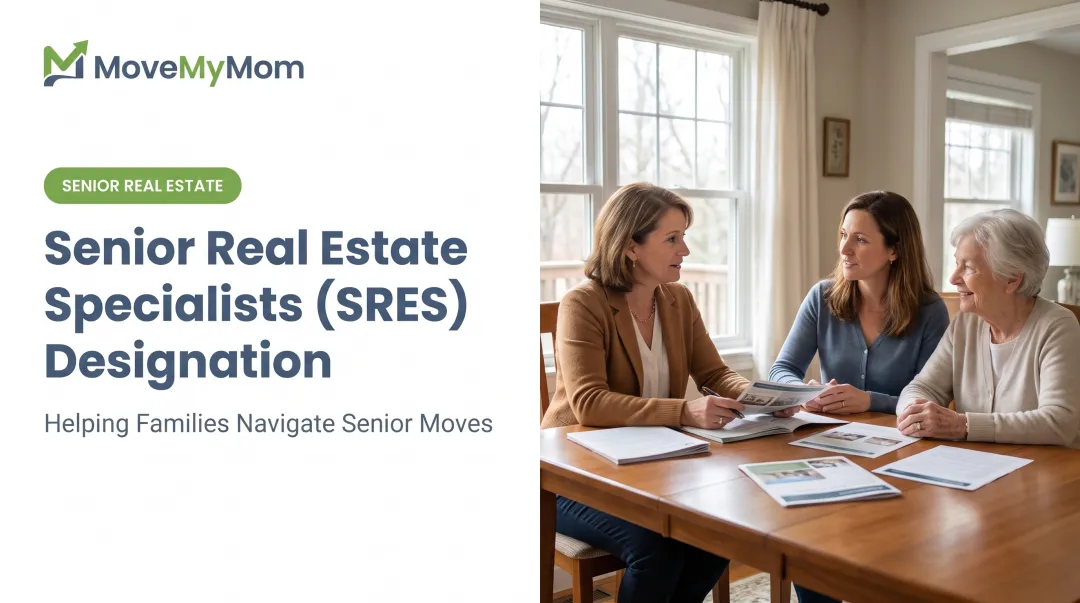

Families face a unique dual challenge: managing practical sale logistics while offering emotional support to a parent saying goodbye to their long-time home. For many adult children coordinating this transition from out of town, the weight of responsibility can be overwhelming. A 2022 national poll found that 21% of adults ages 50-80 had moved within five years, and among those movers, 49% downsized to a smaller home—underscoring how common senior transitions are and why finding the right professional support matters.
Key Takeaways
- Senior-friendly agents recognize the emotional weight of leaving a family home and stay patient through every step
- SRES certification is a voluntary credential, but proven hands-on experience with senior clients often matters more
- Ask about recent senior client volume, how they coordinate with family, and request verifiable references
- Interview at least three agents and compare communication style, responsiveness, and respect for your parent's voice
What Makes a Real Estate Agent "Senior-Friendly"?
A senior-friendly agent recognizes that older adults have distinct needs beyond standard home sales. That includes understanding financial tools like reverse mortgages and estate considerations, awareness of physical or health limitations, and sensitivity to the emotional complexity of major life transitions.
Selling a long-time family home to fund assisted living is not a routine transaction. It requires specialized knowledge and genuine empathy.
The SRES Designation: What It Means
The Seniors Real Estate Specialist (SRES) designation is a voluntary certification offered through the National Association of Realtors for agents serving clients age 50 and older. The two-day SRES course covers:
- Senior housing choices and aging-in-place adaptations
- Reverse mortgages and estate planning considerations
- Housing for Older Persons Act compliance
- Medicare, Medicaid, and Social Security impacts
- Communication strategies for working with older adults and their families
- Building expert referral networks
SRES certification is voluntary, and certification alone isn't everything. An agent with five years of hands-on experience guiding seniors through assisted living moves may offer more practical value than someone who completed the course last month but has never coordinated a sale with a memory care move-in date.

Local Market Knowledge Matters
In Palm Beach County—where 26.1% of residents are 65 or older—senior-focused agents should understand the local senior living ecosystem intimately. They need to know:
- Typical timelines for assisted living move-ins
- How to coordinate home sale closings with community occupancy dates
- Palm Beach County market conditions affecting sale speed
- Local estate sale, auction, and donation resources
Recent data shows Palm Beach County single-family homes took a median of 45 days to contract and 83 days to sale in December 2025. Condos required longer: 63 days to contract and 99 days to sale. Agents should use these benchmarks to help families plan realistic timelines.
The Family-Centered Approach
The best senior-focused agents take a holistic view:
- Communicate clearly with the senior, out-of-town adult children, attorneys, and estate planners
- Show patience when parents need extra time to process decisions or feel overwhelmed
- Coordinate with senior move managers, estate sale experts, movers, and assisted living placement advisors
- Respect the senior's autonomy while keeping family members appropriately informed
This integrated approach reduces the burden on adult children and allows them to focus on emotionally supporting their parent instead of managing complex logistics alone.

Key Qualities to Look for in a Senior-Friendly Real Estate Agent
Emotional Intelligence and Communication Skills
Your agent should listen actively, show genuine empathy for the difficulty of downsizing, and communicate clearly with both your parent and family members without being condescending.
According to the National Institute on Aging, best practices include addressing the older adult directly (not just their companion), using plain language, slowing the pace, and confirming understanding. Those same skills carry straight into real estate consultations.
Red flags:
- Speaking only to you while ignoring your parent
- Rushing decisions or showing impatience
- Using jargon without explanation
- Failing to provide written follow-up
Proven Track Record with Senior Clients
Look for agents with specific, recent experience. Ask how many clients age 65 and older they've worked with in the past 12 months, and how many of those involved downsizing or assisted living transitions. Generic claims like "I work with seniors all the time" aren't enough. You need verifiable numbers.
Check online reviews that mention:
- Work with older adults or aging parents
- Coordinated moves to senior living communities
- Patience during emotional decisions
- Clear family communication
Request references from recent senior clients or their adult children, and actually call them.
Knowledge of Senior-Specific Financial Considerations
Your agent should understand topics that frequently arise in senior home sales:
Capital gains exclusions: The IRS allows up to $250,000 of gain ($500,000 for qualifying married couples) to be excluded when selling a primary residence, if ownership and use tests are met. Agents should know how that applies to parents who have lived in the same home for decades.
Reverse mortgage implications: If your parent has a reverse mortgage, the loan typically becomes due when they sell or move out. A 12-month absence for health care can also trigger repayment. Your agent should flag this and refer you to qualified lending counsel, not advise on loan terms themselves.
Bridge financing: Some families need short-term financing while waiting for a home sale to close, especially when an assisted living community requires upfront fees. Agents should be able to refer families to reputable lenders who offer bridge loans, though they should never provide financial advice directly.
Flexibility and Process Accommodations
Seniors may need:
- Daytime showings that respect energy levels
- More time between appointments
- Modified open house formats
- Breaks during paperwork signing
A senior-friendly agent adapts the process to the client's pace and energy. They also minimize disruption by avoiding last-minute showing requests and back-to-back appointments that leave parents exhausted.
Network of Related Professionals
Well-connected agents can refer your family to:
- Senior move managers who coordinate packing and downsizing
- Movers experienced with senior transitions
- Estate sale companies and auctioneers
- Donation services for furniture and household items
- Junk removal and cleanout specialists
That network matters. Senior moves usually need several coordinated services, and you shouldn't have to find every vendor from scratch.

Important Questions to Ask When Interviewing Agents
Interview at least three agents before making a decision. The questions you ask will reveal their true experience and approach. Credentials on paper only tell part of the story.
Experience and Volume
"How many clients age 65 or older have you worked with in the past 12 months, and how many were moving to assisted living or downsizing?"
Look for specific numbers and recent activity. An agent who worked with two senior clients three years ago isn't the same as one who closes 15–20 senior transitions annually.
Emotional Preparedness
"Can you walk me through how you would handle a situation where my parent feels overwhelmed or emotional during the selling process?"
This tests for empathy, patience, and practical strategies. Strong answers include taking breaks, revisiting decisions later, involving family support, and adjusting timelines rather than pushing through regardless of the parent's state.
Family Coordination
"What is your approach to coordinating with family members who may be out of town or involved in decision-making?"
Critical for adult children managing from a distance. The agent should describe clear communication protocols—regular email or phone updates, video walkthroughs of the property, digital document sharing, and flexible meeting schedules.
Local Senior Living Market Knowledge
"Are you familiar with senior living communities in your area and the typical timeline for moving in? How do you coordinate sale closing with move-in dates?"
This tests both local expertise and logistical planning ability. Agents should know community names, average wait times, and have a process for syncing closing dates with occupancy. That coordination helps you avoid housing gaps or paying for two places at once.
Financial Transparency
"What is your commission structure, and are there any services you provide specifically for senior clients?"
Federal Reserve research found average buyer-agent commission offers of about 2.7% in data through 2023, though total commission structures vary and are fully negotiable. Total seller costs historically ranged from 5–6%, split between buyer and seller agents, though post-settlement practices continue to evolve.
Ask for clear, written commission terms upfront. Inquire whether the agent offers flexible arrangements for senior clients; some do, though this isn't universal.
Verifiable References
"Can you provide references from recent senior clients or their family members?"
An experienced agent will have references ready and be comfortable sharing contact information. Follow up with at least two references and ask about communication quality, patience, problem-solving, and whether they'd hire the agent again.

Where to Find Senior-Friendly Real Estate Agents
Ask Trusted Sources First
Start with recommendations from people who already work with seniors and family transitions:
- Assisted living communities: Often know agents who understand move-in timelines and community processes
- Elder law attorneys: Regularly work with senior clients on housing and estate matters
- Senior move managers and geriatric care managers: Coordinate transitions and can recommend agents they’ve used
- Friends or family: Especially anyone who recently moved a parent
Personal referrals usually come with real feedback on how the agent handled timing, communication, and a sensitive sale.
Search the SRES Directory
The National Association of Realtors SRES Council directory lets you filter by location to find certified specialists in your area. While SRES certification alone doesn't guarantee the right fit, it's a useful starting point for identifying agents with formal senior-focused training.
Use Specialized Referral Platforms
Palm Beach County families can also use free referral platforms such as MoveMyMom, which connects you with local agents experienced in senior home sales and assisted-living moves. That can cut the time spent hunting and screening on your own—but you should still interview candidates and check references yourself.
How MoveMyMom Can Help
MoveMyMom is a free referral platform that connects Palm Beach County families with trusted, vetted real estate agents who have proven experience in senior transitions and assisted living moves. With over 20 years working with families and seniors in the area, MoveMyMom removes the guesswork from finding the right professional.
Why Families Choose MoveMyMom
The platform's network includes agents who understand both the emotional and practical sides of senior moves. These professionals know how to:
- Coordinate home-sale timelines with assisted living move-ins
- Communicate patiently with older adults and their families
- Navigate the financial and logistical challenges these transitions bring
Integrated Support Beyond Real Estate
MoveMyMom can also refer you to other senior-transition specialists, not only a real estate agent:
- Senior move managers who coordinate packing and downsizing
- Estate sale experts and auction specialists
- Movers experienced with senior transitions
- Junk removal and cleanout services
- Donation coordination
This creates a coordinated support system so you're not managing multiple vendor searches while trying to emotionally support your parent. The service is free and concierge-style: call 877-575-9900 or visit movemymom.com to get started.
Frequently Asked Questions
What percentage do most realtors take?
Real estate commissions typically range from 5–6% of the sale price, split between the seller's and buyer's agents (about 2.5–3% each). Rates are fully negotiable, so discuss terms upfront and get everything in writing.
What is an SRES designation and do I need an agent with one?
SRES (Seniors Real Estate Specialist) is a National Association of Realtors certification for agents trained to work with clients 50+. It's a useful credential, but proven hands-on experience with senior clients, backed by references and recent transactions, matters as much or more.
How do I verify an agent has real experience working with seniors?
Ask how many clients age 65+ they worked with in the past year, then call references from recent senior clients or families. Check reviews that mention older adults or assisted living moves, and verify their Florida license at myfloridalicense.com.
Should the agent be close to my parent's age?
Age isn't the deciding factor. Empathy, patience, communication style, and proven senior-client experience matter more. Focus on track record and whether your parent feels respected and heard.
How far in advance should I start looking for a real estate agent?
AARP recommends starting about six months before your intended listing date when you can, so you have time to interview agents and check references. On an urgent assisted living timeline, prioritize agents who can move on an accelerated schedule.